News
-
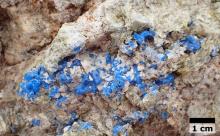
Unearthing the recipe for rare gemstones in the Canadian Arctic
April 4, 2019
When Philippe Belley came to the University of British Columbia to study how gemstones form, he didn’t think he would need to learn how to protect himself from polar bears. But when some of those precious stones are buried in the Canadian Arctic on Baffin Island, where the world’s… read more
-
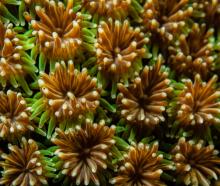
Scientists discover first organism with chlorophyll genes that doesn’t photosynthesize
April 3, 2019
For the first time scientists have found an organism that can produce chlorophyll but does not engage in photosynthesis. The peculiar organism is dubbed ‘corallicolid’ because it is found in 70 per cent of corals around the world and may provide clues as to how to protect coral reefs… read more
-
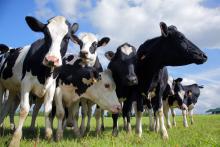
The bigger the evolutionary jump, the more lethal cross-species diseases could be
March 28, 2019
Some diseases which are fatal in one species can cause only mild discomfort in another—but it’s hard for scientists to predict how lethal a disease will be if it leaps across species. However, a new paper published this week in PNAS indicates that the evolutionary relationship between… read more
-
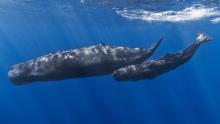
In the Tree of Life, youth has its advantages
March 26, 2019
It’s a question that has captivated naturalists for centuries: Why have some groups of organisms enjoyed incredible diversity—like fish, birds, insects—while others have contained only a few species—like humans. Researchers trying to explain why the Tree of Life is so… read more
-

Big data from tiny babies: New blood sample method could improve infant vaccines
March 12, 2019
The first week of a newborn’s life is a time of the most rapid biological change in life as the baby adapts to living outside the womb, yet surprisingly little is known about these early changes. An international research team co-led by University of British Columbia researchers has… read more
-
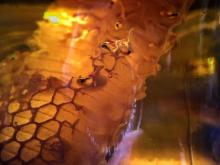
Honey bees can help monitor pollution in cities
March 11, 2019
Honey from urban bees can tell us how clean a city is and help pinpoint the sources of environmental pollutants such as lead, new University of British Columbia research has found. In a study published today in Nature Sustainability, scientists from UBC’s Pacific Centre for Isotopic and… read more
-

Are BC's Killer Whales getting enough to eat? New funding will help UBC scientists find out
March 8, 2019
UBC researchers will use tracking and monitoring technology to determine if Southern Resident Killer Whales are able to forage for enough of their preferred prey, Chinook Salmon, to meet their nutritional needs. The new research project was announced today by Jonathan Wilkinson, Minister of… read more
-
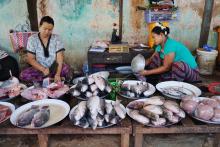
Achieving Paris climate target could net additional billions in fisheries revenue
February 27, 2019
Achieving the Paris Agreement global warming target could protect millions of tonnes in annual worldwide fisheries catch, as well as billions of dollars of annual revenues for fishers, workers’ income and household seafood expenditures, according to new research from the University of… read more
-
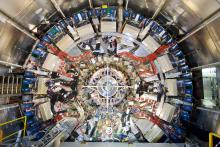
Chasing the mysteries of the universe with the top quark
February 21, 2019
Alison Lister, Canada Research Chair in Particle Physics, quite loves quarks. She belongs to one of the largest scientific collaborations on the planet—the ATLAS experiment at the Large Hadron Collider—and is helping to develop new particle detectors at Canada’s national lab for… read more
-
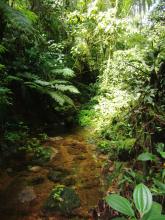
Mega experiment shows species interact more towards tropics and lowlands
February 20, 2019
One of the largest field experiments ever conducted is providing the best evidence yet in support of a key Darwinian theory—that interactions between species are stronger toward the tropics and at lower elevations. An international research team used a simple experiment that mimics how… read more